Introduction: Understanding “The Blowers” and Their Importance
Blowers are often overlooked components of many mechanical and industrial systems, yet they play a vital role in moving air and gas efficiently through complex environments. When people speak about “the blowers,” they might be referring to a class of machines designed to generate high‑velocity airflow for purposes ranging from heating, ventilation, and air conditioning (HVAC) to manufacturing applications where consistent air movement is critical for processing materials or controlling environmental conditions. At the most basic level, the blower is an air‑handling device that increases air pressure and drives airflow, making it more powerful than a traditional household fan and essential in systems where pressure, volume, and reliability matter deeply.
The science of blowers spans decades of engineering innovation, dating back to early industrial applications where factories needed to remove dust and unwanted gases to protect workers and machinery. Today’s blowers are far more advanced, incorporating digital controls, variable speed technology, and enhanced material designs that improve efficiency and longevity. Across industries, from wastewater treatment plants to modern skyscraper HVAC systems, blowers are the unsung workhorses that ensure environments receive the right amount of conditioned or pressurized air precisely when and where it’s needed.
This article explores the blowers in depth, unpacking how they work, where they are used, how to choose the right type, strategies for maintenance and safety, and future directions in blower technology. Through this comprehensive discussion, you will gain a deeper understanding of why blowers matter, how they contribute to system performance, and what trends are shaping their evolution.
What Are Blowers and How They Compare to Fans and Compressors
At their core, blowers are devices that move air or gas by creating pressure differences within a system. This basic concept sounds simple, yet blowers are engineered to accomplish this task under very specific and demanding conditions. Unlike a typical household fan, which simply circulates air at low pressure, blowers generate increased air velocity and static pressure. This enables them to overcome resistance found in ductwork, filters, or industrial piping. As such, blowers are an essential part of any system where air must be forced through an environment that imposes friction or restriction.
Blowers occupy a middle ground between fans and compressors. Fans are optimized for moving large volumes of air with minimal resistance and are used in applications like cooling a room or providing gentle ventilation. Compressors, on the other hand, dramatically increase gas pressure and are used in highly pressurized systems such as pneumatic tools or refrigeration cycles. Blowers strike a balance: they generate higher pressure than fans but maintain continuous airflow without the extreme compression seen in compressor systems. This makes them uniquely suited for jobs such as exhausting industrial fumes, supplying combustion air for burners, or aerating biological systems in wastewater facilities.
One of the key differentiators in blower design is how airflow and pressure are generated. This leads to different categories of blowers — such as centrifugal blowers, positive displacement blowers, and regenerative blowers — each optimized for particular airflow and pressure profiles. While the physical principles underlying these technologies vary, they all share the goal of delivering reliable airflow to meet the operational needs of a system.
The Core Mechanics of Blower Technology
Blower technology is deeply rooted in fluid dynamics and mechanical engineering. To understand how blowers work, it’s important to recognize that they rely on both the movement of air and the transfer of energy from a motor or prime mover into the airstream. In most blower systems, the device consists of a housing that encloses rotating components such as impellers, lobes, or scrolls. When the motor turns these components, air is drawn into an inlet, accelerated, and then discharged at a higher pressure than when it entered.
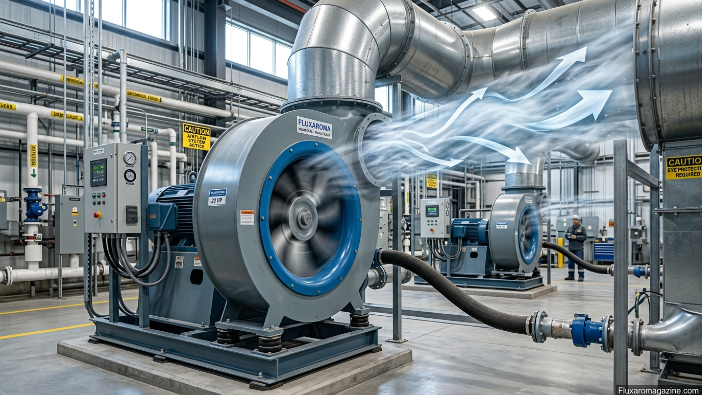
Centrifugal blowers are among the most widely used designs. They employ one or more impellers mounted on a shaft within a housing shaped like a scroll. As the impeller spins, air enters the center of the rotating blades and is thrust outward by centrifugal force. As air moves outward, its velocity increases and it gains pressure, which is then guided through the outlet ductwork. The advantage of centrifugal blowers lies in their ability to produce relatively high static pressure and consistent airflow, making them suitable for applications like commercial HVAC systems, dust collection, and industrial ventilation.
In contrast, positive displacement blowers operate by trapping a fixed volume of air and mechanically pushing it through the system. Designs such as rotary lobe blowers or screw blowers create chambers of air that are repeatedly expanded and contracted to move air steadily and predictably. These blowers are prized for applications that require a consistent volumetric flow regardless of minor pressure changes, such as pneumatic conveying or aeration systems. Regenerative blowers, another category, use multiple small impellers to gently accelerate air, creating a smooth, pulsation‑free flow that is valuable in laboratory equipment or silent operation environments.
Across all these designs, engineers pay close attention to the shape of the housing, the balance of moving components, and the efficiency of the motor. Achieving smooth, energy‑efficient airflow requires precision manufacturing and careful matching of blower performance characteristics with the demands of the application.
Major Industrial and Commercial Applications of Blowers
Blowers are used in a remarkable variety of settings, bridging gaps between comfort, safety, and process efficiency. Perhaps the most familiar application for many people is in heating, ventilation, and air conditioning (HVAC) systems. Here, blowers circulate conditioned air through buildings, ensuring that occupants enjoy consistent temperature and air quality. Large commercial buildings, hospitals, and industrial plants depend on blowers to deliver heating or cooling across miles of duct networks, overcoming friction and pressure drops that would otherwise reduce system performance.
In industrial environments, blowers serve critical roles in material handling and environmental control. Many manufacturing processes generate dust, fumes, or particulates that must be removed to safeguard workers and prevent equipment damage. Blowers work in tandem with filtration systems to pull contaminated air through filters and expel clean air into the environment. Pneumatic conveying systems also rely on blowers to move powders and granular materials through pipelines without mechanical contact, enhancing productivity and minimizing downtime.
Blowers are equally important in wastewater treatment and process aeration systems, where they supply oxygen to microbial communities that break down organic waste. In aeration tanks, blowers ensure that oxygen is distributed evenly and consistently, which directly impacts the efficiency and effectiveness of biological treatment processes. Additional applications extend into combustion air supply for boilers, cleanroom ventilation in pharmaceutical facilities, and drying systems in food processing or paper production. Across these varied settings, blowers provide irreplaceable airflow, helping systems meet production targets while respecting environmental and safety standards.
How to Select the Right Blower for Your System
Choosing the appropriate blower involves a nuanced understanding of both system requirements and blower characteristics. Engineers begin by identifying the expected airflow (often measured in cubic feet per minute or CFM) and static pressure demands of the application. Airflow requirements dictate how much air must be delivered, while static pressure describes the resistance the blower must overcome as air moves through ducts, filters, and process equipment. These two metrics form the foundation of blower selection.
Another critical consideration is the type of blower technology best suited for the job. Centrifugal blowers excel in systems with moderate to high resistance and long duct runs, while positive displacement blowers are preferred where consistent volume delivery is essential despite varying pressures. Regenerative blowers fill niche roles where very quiet operation or smooth, low‑pulsation airflow is needed. The choice also depends on environmental factors such as temperature extremes, corrosive gases, or particulate‑laden air, which can require specialized materials and coatings in blower construction.
Energy efficiency is a pivotal factor in modern blower selection. Systems that operate continuously, such as hospital HVAC blowers or wastewater aerators, benefit significantly from features like variable speed drives (VSDs) that adjust blower speed to match real‑time demand. This reduces wasted energy, prolongs component life, and lowers operating costs. Selecting a blower with good efficiency ratings and advanced control systems can be one of the most impactful decisions a facility manager makes in terms of both performance and sustainability.
The Role of Blower Efficiency and Energy Considerations
Energy efficiency has become an indispensable focus in the design and application of blower systems. As businesses and organizations contend with rising energy costs and environmental regulations, specifying high‑efficiency blowers can deliver measurable benefits. Efficiency in this context refers to how effectively a blower converts electrical energy into useful airflow, with minimal losses due to friction, turbulence, or inefficient motor operation.
Advancements in electric motor technology, such as high‑efficiency premium motors and variable speed control, have transformed blower performance. Variable speed drives allow blowers to run at only the speed necessary to meet system demand, reducing power consumption during periods of lower need. This not only cuts energy usage but also reduces mechanical stress on blower components, leading to lower maintenance costs and longer service intervals.
Beyond individual blower units, integrating blowers with broader building automation systems (BAS) or industrial control systems enables real‑time adjustment of airflow in response to changing environmental conditions or process needs. Smart sensors can detect temperature changes, air quality levels, or pressure variations, and dynamically modulate blower operation for optimal performance. Such integrations reflect a broader trend toward intelligent, data‑driven airflow management that balances efficiency, comfort, and sustainability.
Maintenance and Longevity of Blower Systems
Maintaining blower systems is a critical aspect of ensuring reliability and preventing costly downtime. Regular inspection and service of blowers can reveal early signs of wear, imbalance, or mechanical stress before a failure occurs. Key maintenance activities include checking bearings for wear, verifying belt tension and alignment, and inspecting the blower housing for buildup of dust or debris that can impede performance. Neglecting maintenance can lead to reduced airflow performance, increased energy consumption, and eventual mechanical failure.
Lubrication of moving parts is another essential maintenance task. Properly and consistently lubricated bearings and rotating elements help reduce friction and heat buildup, enhancing efficiency and prolonging service life. In systems where blowers operate in high‑temperature or corrosive environments, maintenance teams must pay special attention to seals, gaskets, and protective coatings that help preserve internal components.
In addition to mechanical maintenance, electrical components deserve regular attention. Motor windings, starters, control panels, and wiring should be examined for signs of overheating, loose connections, or other electrical concerns. A blower system is only as strong as its weakest link, and ensuring both mechanical and electrical elements are in good working order fosters greater reliability and safety.
Safety Considerations When Installing and Operating Blowers
Blower systems, whether in industrial plants or commercial buildings, pose unique safety challenges that must be addressed through thoughtful design, training, and protective equipment. Moving parts like impellers and belts can create hazards if they are not adequately guarded. Installing protective guards and shields around these elements protects personnel from accidental contact that could result in injury.
Another safety consideration is noise exposure. Blowers, particularly larger industrial models, can generate significant sound levels during operation. Prolonged exposure to high noise can lead to hearing damage, so engineering controls such as acoustical enclosures, barriers, or specially designed low‑noise blowers help reduce risks. Compliance with workplace noise regulations often requires careful planning and investment in noise mitigation strategies.
Blowers also interact with electrical systems that can present hazards if not properly managed. Adequate grounding, circuit protection, and adherence to lockout/tagout procedures ensure that technicians can safely service blower systems without risk of electrocution. Incorporating safety procedures into training programs and operational protocols helps create a culture of safety that extends beyond compliance to active protection of personnel.
Read More : the blowers
Innovations and the Future of Blower Technology
The future of blower technology is tied to broader trends in electrification, sustainability, digital automation, and advanced materials science. Manufacturers continue to innovate by integrating sensors, connectivity, and predictive analytics into blower systems. These smart blowers can detect emerging issues such as imbalance, bearing wear, or airflow disruptions before they lead to failure, allowing maintenance to be scheduled proactively rather than reactively.
Additionally, the rise of industrial Internet of Things (IIoT) platforms enables blowers to communicate with larger facility management systems, providing insight into performance trends, energy consumption patterns, and system health. This data‑driven approach improves decision making and allows operators to fine‑tune blower performance for both reliability and energy efficiency.
Emerging materials and manufacturing techniques also contribute to blower advancements. Lightweight composites, improved bearing technologies, and precision‑machined impellers help increase efficiency and reduce operating noise. As industries continue to push for greener and more efficient technologies, blower manufacturers respond with products that deliver high performance while minimizing environmental footprint.
Conclusion: The Central Role of Blowers in Modern Systems
Blowers are indispensable components in a wide range of systems that require controlled air movement. From industrial ventilation and HVAC to wastewater aeration and material handling, blowers provide the foundation for efficient airflow, environmental control, and process performance. Understanding how blowers operate, how to select the right type, and how to maintain them for long service life is essential for engineers, facility managers, and decision makers across industries.
Advances in technology continue to shape blower efficiency, control, and integration with broader automation systems. Energy considerations and sustainability goals further influence how blowers are designed and deployed, making them not only essential for performance but also critical for achieving environmental targets. Through careful selection, maintenance, and attention to safety and innovation, the blowers at the heart of many systems will continue to deliver reliable and powerful airflow well into the future.