Introduction
RepMold is an advanced manufacturing concept that blends traditional molding principles with modern digital production technologies such as computer-aided design, additive manufacturing, CNC machining, and automated quality control systems. In today’s highly competitive industrial environment, companies are constantly searching for faster, more efficient, and more cost-effective production methods. RepMold has emerged as one of the approaches that supports this transformation by enabling rapid replication and optimization of molds used in manufacturing processes.
The importance of RepMold lies in its ability to connect digital design with physical production in a seamless workflow. Instead of relying solely on slow, manual mold creation techniques, RepMold introduces a system where molds can be digitally designed, quickly prototyped, and efficiently replicated for mass or customized production. This has made it a significant topic in Industry 4.0 discussions, where automation, precision, and scalability are key priorities.
What is RepMold Technology in Modern Manufacturing
RepMold technology refers to a manufacturing approach focused on the replication and optimization of molds using digital tools and advanced fabrication methods. The term itself combines “replication” and “molding,” highlighting its primary function of producing identical molds or mold-based components with high precision. It is widely associated with digital manufacturing ecosystems where speed and repeatability are essential for production efficiency.
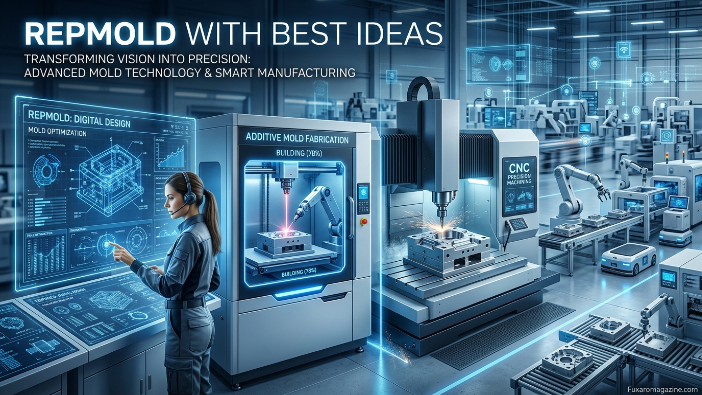
At its core, RepMold is not limited to a single machine or software. Instead, it represents a workflow that integrates multiple technologies into a unified system. Engineers begin with digital models that define the shape, structure, and function of a product. These models are then translated into physical molds using technologies such as 3D printing or CNC machining. This allows manufacturers to move from concept to production in significantly less time than traditional methods.
The broader significance of RepMold lies in its adaptability. It can be used for small-scale prototyping, medium-scale production, or even specialized manufacturing environments where frequent design changes are required. This flexibility makes it an increasingly valuable tool in industries that demand innovation and rapid response to market needs.
How RepMold Works in a Production Environment
The RepMold process begins with digital design creation, typically using CAD (Computer-Aided Design) software. In this stage, engineers define precise measurements, geometry, and functional properties of the intended product. This digital model serves as the foundation for all subsequent manufacturing steps, ensuring consistency and accuracy from the very beginning.
Once the design is finalized, it is converted into a physical master pattern using advanced fabrication techniques such as 3D printing or CNC machining. This master pattern acts as a reference model that is used to create molds. Depending on the production requirements, materials like silicone, resin, or composite compounds may be used to form durable molds capable of repeated use.
After the mold is created, it enters the replication phase, where identical components are produced in batches. One of the key advantages of RepMold is that if any design modification is needed, engineers can simply update the digital model and generate a new mold without restarting the entire production cycle. This significantly reduces downtime and enhances production efficiency in dynamic manufacturing environments.
Materials and Digital Tools Used in RepMold Systems
RepMold relies heavily on advanced materials and digital technologies to achieve precision and durability. On the digital side, CAD software, simulation tools, and generative design platforms play a crucial role in creating optimized models. These tools allow engineers to test structural integrity, thermal resistance, and performance characteristics before physical production begins.
In terms of materials, RepMold systems often utilize high-performance polymers, resins, and metal alloys depending on the application. For rapid prototyping, thermoplastics and photopolymer resins are commonly used due to their flexibility and ease of shaping. For industrial-scale molds, more durable materials such as aluminum or steel may be incorporated to ensure long-term usability.
Additive manufacturing technologies like 3D printing are central to the RepMold workflow. They allow for layer-by-layer construction of complex geometries that would be difficult or impossible to achieve using traditional machining. CNC machining, on the other hand, provides high precision for producing rigid and detailed mold components, ensuring that final outputs meet strict industrial standards.
RepMold in Rapid Prototyping and Product Development
One of the most important applications of RepMold is in rapid prototyping. In traditional manufacturing, developing a prototype can take weeks or even months due to the complexity of mold creation and tooling adjustments. RepMold significantly reduces this timeline by enabling digital-to-physical transformation in a much shorter period.
This acceleration is particularly valuable in product development cycles where companies need to test multiple versions of a design before finalizing production. With RepMold, engineers can quickly produce prototype molds, evaluate performance, and make necessary adjustments without incurring high costs or delays. This iterative approach improves innovation and reduces risk in product development.
RepMold also supports customization in prototyping. Instead of producing a single design for mass production, manufacturers can easily create variations tailored to specific user requirements or market segments. This level of flexibility is increasingly important in industries such as consumer electronics, automotive design, and medical device manufacturing.
Industrial Applications of RepMold Technology
RepMold is widely used across multiple industries due to its versatility and efficiency. In the automotive sector, it is used to manufacture interior and exterior components such as dashboards, panels, connectors, and structural fittings. These components often require frequent design updates, making RepMold an ideal solution for maintaining production flexibility.
In the medical industry, RepMold supports the production of precision equipment components, surgical tool housings, and diagnostic device parts. Since medical manufacturing demands high accuracy and strict quality control, the repeatability offered by RepMold ensures that each component meets regulatory and functional standards consistently.
Consumer electronics is another major field where RepMold plays a critical role. Devices such as smartphones, laptops, and wearable gadgets require compact, high-precision molded parts. RepMold enables manufacturers to produce these components at scale while maintaining consistent quality and adapting quickly to design innovations.
Benefits of RepMold in Modern Manufacturing Systems
One of the most significant benefits of RepMold is its ability to reduce production time. By replacing slow traditional mold-making processes with digital workflows, manufacturers can significantly shorten development cycles. This allows companies to respond quickly to market demand and launch products faster than competitors.
Another major advantage is cost efficiency. RepMold reduces material waste, minimizes manual labor, and eliminates the need for multiple physical prototypes. Over time, this leads to substantial savings in production costs, especially for companies involved in frequent product design updates or short production runs.
RepMold also enhances design flexibility. Engineers can modify digital models at any stage of the process and regenerate molds without starting from scratch. This adaptability supports continuous innovation and allows manufacturers to experiment with new ideas without significant financial risk.
Limitations and Challenges of RepMold Technology
Despite its advantages, RepMold is not without limitations. One of the primary challenges is the requirement for advanced technical expertise. Engineers and operators must be skilled in CAD design, digital fabrication tools, and material science to fully utilize RepMold systems effectively.
Another limitation is material durability in certain applications. While RepMold is highly effective for prototyping and medium-scale production, traditional steel molds may still be more suitable for extremely high-volume manufacturing. This means RepMold is often used as a complementary system rather than a complete replacement.
Additionally, the initial investment in RepMold infrastructure can be relatively high. Companies need to invest in software, hardware, and skilled personnel, which may be a barrier for smaller manufacturers. However, these costs are often offset by long-term efficiency gains.
RepMold vs Traditional Molding Techniques
Traditional molding techniques rely heavily on manual processes and physical tooling, which often require significant time and financial investment. These methods are reliable but lack flexibility, especially when design changes are needed during production. In contrast, RepMold introduces a digital-first approach that prioritizes speed and adaptability.
Another key difference lies in production scalability. Traditional molds are often expensive to modify once created, making iterative design difficult. RepMold systems allow rapid adjustments by simply updating digital files and regenerating molds. This makes it far more suitable for modern industries where product cycles are shorter and innovation is continuous.
However, traditional molding still holds an advantage in extremely high-volume manufacturing environments due to its long-term durability and cost efficiency per unit. As a result, many industries use a hybrid approach, combining RepMold for development and traditional molding for large-scale production.
Read More : RepMold Technology Explained: Modern Manufacturing Guide
Future of RepMold in Industry 4.0 and Smart Manufacturing
The future of RepMold is closely tied to advancements in Industry 4.0 technologies such as artificial intelligence, machine learning, and IoT-enabled smart factories. As manufacturing becomes more data-driven, RepMold systems are expected to become more automated and self-optimizing.
AI integration will likely allow RepMold systems to analyze performance data in real time and suggest improvements to mold design and production efficiency. This could lead to fully automated design-to-production pipelines where minimal human intervention is required.
In the long term, RepMold is expected to play a central role in personalized manufacturing and on-demand production systems. As industries move toward customization and sustainability, RepMold will continue to evolve as a key enabling technology that bridges digital engineering with physical manufacturing.
Conclusion
RepMold represents a significant advancement in modern manufacturing by combining digital design, rapid prototyping, and efficient mold replication into a unified system. It addresses many of the limitations of traditional molding methods by improving speed, flexibility, and cost efficiency while supporting innovation-driven production models.
Although it has certain limitations, particularly in terms of initial investment and high-volume durability, its benefits in prototyping, customization, and industrial adaptability make it a valuable tool across multiple sectors. As manufacturing continues to evolve under Industry 4.0, RepMold is expected to become even more intelligent, automated, and widely adopted.
Ultimately, RepMold is not just a manufacturing technique but a shift in how industries think about design, production, and innovation.