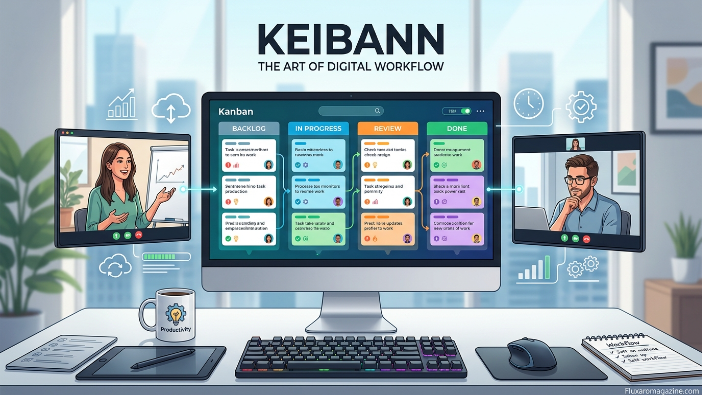
Introduction: Understanding Keibann and Its Growing Importance
The term keibann has started appearing more frequently in digital conversations, productivity discussions, workflow management content, and online project planning communities — yet many people still ask, “What exactly is keibann?” While the word may not have a formal definition in traditional English dictionaries, its usage online reflects a blend of linguistic roots, productivity philosophy, and evolving digital workflow systems. To truly understand keibann, you need to explore both its linguistic origins in Japanese terminology and the way it has been adapted as a conceptual framework for organizing work and information. As remote and hybrid work models become standard in industries worldwide, systems that emphasize visual coordination and transparent task tracking have become essential, and that is where keibann has found relevance.
At its core, keibann represents a convergence between traditional communication boards and modern visual workflow systems. In a literal sense — similar to the related Japanese word keijiban — it refers to a space where information is displayed and shared. When applied to productivity and workflow, keibann becomes a methodology for organizing tasks, clarifying processes, and enhancing collaboration. Understanding this evolution requires delving into the history of workflow frameworks, the influence of Japanese organizational principles, and the practical reasons digital teams adopt visual work spaces. This comprehensive guide will walk you through what keibann means, how it works, its historical context, its relationship with other productivity systems, and the benefits and challenges of applying it in modern work environments.
The Linguistic Roots of Keibann and Its Connection to Keijiban
To understand keibann, we must first explore its linguistic foundation, particularly its connection to the Japanese word keijiban. In Japanese, 掲示板 (keijiban) directly translates to “bulletin board” or “notice board.” The compound consists of keiji, meaning a posted notice or announcement, and ban, meaning a board or panel. Traditionally, keijiban referred to physical bulletin boards where schools, offices, and communities posted public notices, announcements, schedules, and important updates for people to read. This practice of displaying information in a centralized, visible location was about communication, transparency, and communal awareness.
With the rise of the internet, the word keijiban naturally transitioned into digital spaces. Early online forums, message boards, and community discussion sites in Japan adopted the term to describe their platforms — spaces where users could post messages, questions, and discussions for others to see. In this digital context, the essence of keijiban remained the same: visible communication, shared knowledge, and collective interaction among users. Over time, the concept influenced digital communication models across languages and cultures, especially as global teams began seeking tools that mimic visual information sharing and public collaboration.
While the exact term keibann is not widely documented in traditional linguistic resources, its pronunciation and structure reflect a closely related evolution from keijiban, shaped by online usage and productivity culture. Some discussions suggest that keibann may have emerged as a transliteration variation or a brand‑worthy term coined to represent workflow structures inspired by the original keijiban concept. Regardless of its linguistic origin, the underlying idea remains rooted in sharing information openly and visually — a principle that is central to modern workflow and project management systems that aim to keep teams aligned and informed.
How Keibann Functions as a Visual Workflow Concept
As work environments have shifted toward digital platforms, especially in the last decade, teams have increasingly adopted visual workflow tools to manage tasks, deadlines, and responsibilities. In this context, keibann has evolved into a conceptual framework that emphasizes visual coordination, process transparency, and real‑time task tracking. The core idea in a keibann system is to create a shared visual representation of work — often resembling boards or dashboards — where every task, phase, and progress indicator is visible to collaborators. This creates a centralized workspace that replicates the traditional physical bulletin board in a digital form, letting team members see the full picture of work at a glance.
A typical keibann system organizes work into categories, stages, or workflow lanes indicating tasks that are yet to start, tasks in progress, and completed tasks. These visual cues help teams track what is happening now, what needs attention next, and where bottlenecks or delays may be occurring. The benefit of this transparency is that it removes ambiguity from collaborative work environments. Instead of relying solely on written reports or email threads, team members can instantly observe workflow status, task ownership, dependencies, and priorities. This visibility supports faster decision‑making, more effective coordination, and fewer misunderstandings.
One of the reasons keibann resonates with digital teams is because it aligns with how people naturally process information visually. Human cognition favors patterns, spatial relationships, and visual cues over long textual descriptions alone. When tasks are displayed visually — using cards, color codes, or segmented lanes — team members can quickly interpret workload distributions, progress timelines, and deadlines without intensive textual analysis. This visual orientation not only increases clarity but also enhances engagement, accountability, and collective focus among team members who may be distributed across time zones and locations.
The Evolution of Bulletin Boards to Digital Workflow Systems
To fully appreciate keibann as a modern concept, we can trace its evolution through historical workflow and team communication tools. Long before digital screens, teams relied on physical bulletin boards in workplaces, community centers, and schools to communicate key information publicly. These boards served as focal points for announcements, schedules, contact information, and alerts — building a shared knowledge ecosystem in a central place that everyone could access. This traditional practice demonstrated how public, visible communication supports organizational alignment and cultural cohesion.
With the advent of computers and the internet, early online bulletin board systems (BBS) became digital analogs of physical keijiban boards. Users could post messages, questions, notices, and feedback in threaded formats visible to others, creating community knowledge hubs and collaborative discussion spaces. These early practices laid the groundwork for modern online forums, comment platforms, and social communities. As software tools grew more sophisticated, developers introduced digital task boards and project management dashboards that mirrored the visual nature of bulletin boards but incorporated workflow logic, automation, and dynamic updating.
By the early 2000s, lean and Agile methodologies had popularized visual task boards in software development and project planning, leading to widespread adoption of systems like Kanban, Scrum boards, and digital dashboards such as those used in platforms like Trello, Jira, and Asana. These tools blended the visual transparency of traditional boards with structured workflow stages, real‑time updates, and collaboration features. In this context, keibann represents the culmination of visual communication principles — evolving from physical notice boards to dynamic digital workflows that enable teams to coordinate complex work without losing sight of overarching goals.
Comparing Keibann to Other Workflow Frameworks
Although keibann is often discussed independently, it shares many similarities with established workflow methodologies such as Kanban, Agile, and Lean management. Kanban, originally developed in manufacturing by Toyota, uses visual boards to track work through stages and limit work in progress. The objective is to improve flow efficiency, reduce waste, and ensure continuous delivery. This emphasis on visual boards and flow optimization closely mirrors many key elements associated with keibann systems.
Agile frameworks focus on iterative progress, frequent communication, and adaptive planning. While Agile does not mandate a specific visual tool, many Agile teams use visual boards — either physical or digital — to display user stories, tasks, and sprint progress. This shared visual workspace fosters collaboration, accountability, and immediate feedback loops. Keibann systems similarly stress real‑time visibility, adaptive workflows, and shared understanding among contributors, making them complementary to Agile practices.
Lean management emphasizes eliminating waste, optimizing processes, and enhancing value creation for stakeholders. In a digital workflow context, visual tools like keibann help teams identify inefficiencies, redundant steps, and process delays. By making work visible and understandable at every level, teams can spot bottlenecks earlier and adjust strategies more efficiently. Although keibann may not be a formal methodology like Kanban or Scrum, its visual and workflow‑oriented nature aligns with the core principles of these established frameworks — making keibann both compatible with and inspired by broader workflow philosophies.
Practical Benefits of Implementing Keibann Workflows
One of the most tangible benefits of keibann systems is enhanced visibility and transparency across work activities. When tasks, deadlines, and responsibilities are displayed visually, team members no longer have to interpret multiple email threads, fragmented messages, or scattered notes to understand what needs to be done. Instead, they can instantly see workflow progress and task assignments in one centralized plane. This clarity reduces confusion, shortens response times, and supports faster alignment, especially in teams with remote members, cross‑functional roles, or shifting priorities.
Another major benefit of a keibann workflow is improved collaboration and team cohesion. Because information is shared openly and visually, contributors feel more connected to the overall mission and understand how their work fits into the larger process. This collective awareness fosters accountability, encourages proactive communication, and enhances mutual support among team members. When everyone can see the consequences of delays or progress at a glance, it becomes easier to coordinate efforts and adjust resources where needed.
Keibann also supports continuous improvement within organizations. By making workflow stages visible and dynamic, teams can regularly analyze how work moves from one phase to another. This frequent review — sometimes formalized through retrospectives or team discussions — reveals patterns of inefficiency, recurring bottlenecks, and opportunities for optimization. Over time, teams that use keibann‑style visual systems often find themselves refining processes, eliminating waste, and accelerating delivery cycles more effectively than teams relying solely on textual task lists or siloed communication tools.
Challenges and Misconceptions About Keibann
Despite its many benefits, implementing keibann in a way that yields meaningful results requires understanding and discipline. One common challenge teams face is treating the visual board itself as the end goal rather than a living process tool. When keibann boards become static, outdated, or neglected, they lose their value as a source of real‑time insight. To prevent this, teams must commit to regular updates, ongoing reviews, and active participation from all contributors. Without collective ownership, keibann systems can deteriorate into cluttered visuals that create more confusion than clarity.
Another misconception is that keibann systems automatically solve all collaboration problems. While visual workflows provide powerful transparency, they do not replace the need for clear communication, strategic planning, or leadership alignment. If teams adopt keibann without a shared understanding of roles, expectations, and communication norms, the visual system may show work but not necessarily improve decision‑making or conflict resolution. To get the most out of keibann, teams should integrate it with intentional communication practices, regular check‑ins, and cultural norms that support accountability and feedback.
Additionally, for small or simple projects, a keibann board may feel overly elaborate or unnecessary. When work consists of only a few easily tracked tasks, a detailed visual board can add complexity rather than clarity. In these cases, the value of keibann becomes more apparent as work scales in size, complexity, or team distribution. Recognizing when to scale keibann practices according to project needs is a key aspect of effective application.
Read More : keibann
Tools and Technologies That Support Keibann Practices
Modern digital workflows are supported by a wide range of tools designed to create and manage visual boards, dashboards, and task flows — all of which align with the principles of keibann. Platforms like Trello, Asana, Notion, and Jira offer customizable boards where teams can organize tasks into stages, assign owners, set deadlines, and add visual labels or color codes. These tools provide dynamic updates, real‑time collaboration features, and integrations with other productivity systems, amplifying the visibility and coordination benefits of visual workflows.
Digital whiteboard tools such as Miro and Mural also support keibann style practices by offering flexible canvases where teams can sketch workflows, group tasks, and build visual process maps collaboratively. These tools are especially useful in ideation sessions, strategic planning workshops, and remote team environments where brainstorming, alignment, and visual communication go hand‑in‑hand. By combining visual boards with annotation features, teams can enrich keibann workflows with context, insights, and structured discussions.
In addition to standalone platforms, many organizations integrate visual workflow capabilities into broader enterprise tools, such as Microsoft Teams, Slack, and centralized project suites. These integrations allow keibann boards to coexist with communication channels, document repositories, and organizational calendars — creating a cohesive digital ecosystem where information flows seamlessly across functions. When properly adopted, these technologies support the kind of transparent, real‑time collaboration that defines effective keibann practice.
Conclusion: Why Keibann Matters for Modern Work
In an era defined by remote work, cross‑functional teams, and rapid change, systems that enhance visibility, coordination, and shared understanding have become indispensable. Keibann — rooted in traditional communication boards and extending into modern visual workflow systems — represents a powerful approach for organizing work with clarity, accountability, and adaptability. While the term itself may not be universally defined in conventional language resources, its conceptual application draws on principles that have guided effective collaboration for decades: transparency, shared context, and real‑time insight.
By integrating keibann principles into digital workflows, teams can break down silos, reduce informational friction, and create environments where everyone understands not just what work needs to be done, but how tasks interrelate and progress over time. Whether applied through dedicated visual tools or adapted into larger ecosystem platforms, keibann encourages teams to see work clearly, communicate openly, and adjust strategically — qualities that are essential for success in today’s fast‑moving, interconnected world.
Ultimately, keibann is more than just a visual board or a software feature — it is a mindset that values clarity, collaboration, and continuous improvement. As organizations continue to navigate complexity and change, the principles behind keibann will remain relevant, helping teams coordinate work with confidence, purpose, and collective clarity.